Click on each cluster to learn information about the cluster, prerequisites, and faculty instructors.

Cluster 1 - Coming Soon
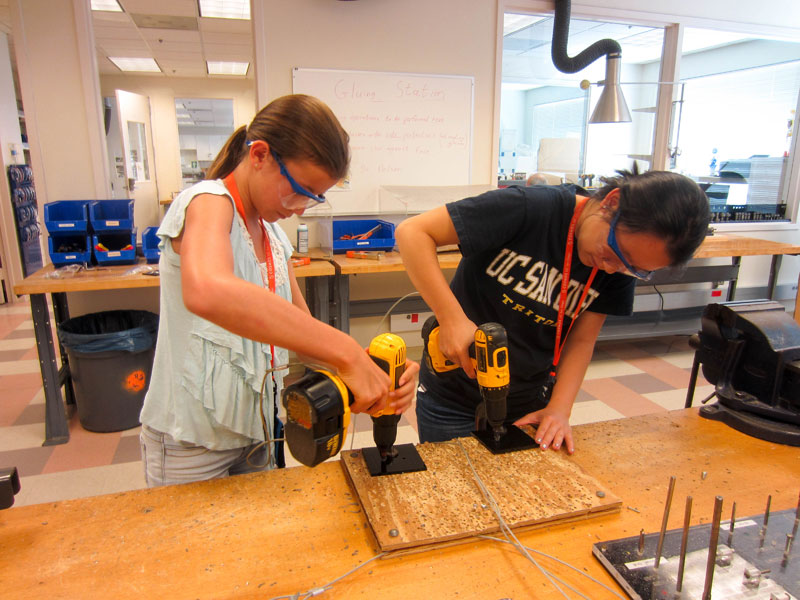
Cluster 2 - Engineering Design and Control of Kinetic Sculptures
Instructors:
Raymond De Callafon, Professor, Department of Mechanical & Aerospace Engineering, UCSD
Prabhakar Bandaru, Professor, Department of Mechanical & Aerospace Engineering, UCSD
Prerequisite:
Algebra I and 8th-grade general science or equivalent
Recommended:
Open to students finishing their sophomore year or above prior to the summer
Description:
Mechanical Engineering and Computer Control are brought together in many modern products that have moving parts, ranging from heavy automobiles to light-weight drones and robotic vacuum cleaners. In this cluster, students will analyze, design and build Kinetic (Moving) Sculptures operated under Automatic Control to get a comprehensive introduction to mixed disciplines in the field of engineering. Students design and analyse a pendulum clock during the first week to become familiar with Inventor, AutoCAD, running 2D dynamic simulations, and (remote) manufacturing capabilities of a LASERcamm and a 3D printer. In the following weeks, Mechanical Engineering methods will be used to analyse, design and build three dimensional kinetic sculptures where marbles move along ramps, bounce on trampolines and drop in baskets. The sculptures are augmented with sensors, motors and computer control to emphasize the mix of engineering skills needed to design a reliable and automatically controlled kinetic sculpture. The students attending this cluster will walk away with valuable engineering experiences that include the use of modern micro-processor controller to measure and analyze timing and mechanical behavior of their design and integrating engineering design and control principles throughout the curriculum of this cluster. Moreover, student will be able to (remotely) use the state of the art facilities at the Mechanical and Aerospace Engineering (MAE) department that include the MAE Design Studio, LASERcamm and 3D Printers for rapid prototyping along with advanced computer laboratories for creating computer drawings, running dynamic simulations and programming a microcontroller. Examples of prior year projects can be seen here.
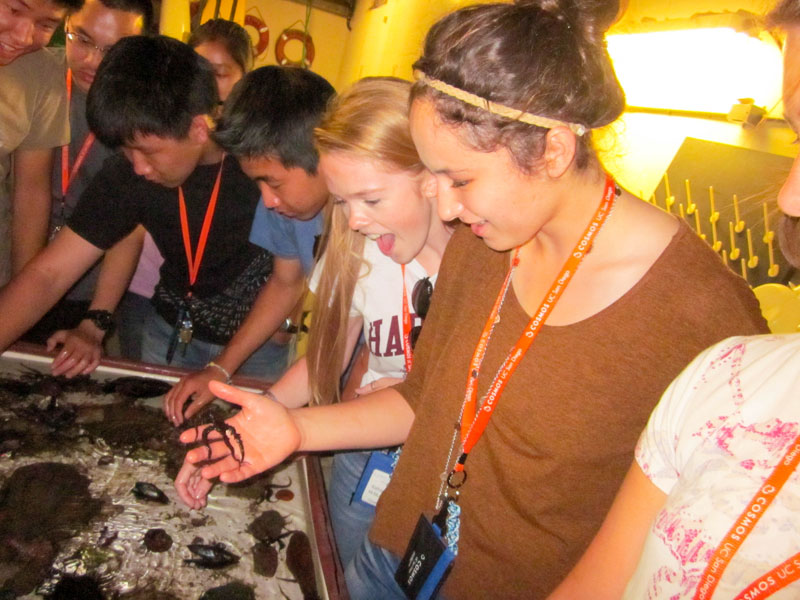
Cluster 3 - Music and Math: The Art of Digital Audio
Instructors:
Marcelo Caetano, Assistant Professor, Department of Music, UCSD
Myles Ortiz-Green, Graduate Co-Instructor
Prerequisite:
A curious and creative mind, an interest in music, and familiarity with math and computers (hardware and software).
Description:
Have you ever wondered how you can truly unlock the creative potential of the computers that you find everywhere and use every day? This cluster will help you find ways to answer the question: “How can I make music with my computer?” Traditionally, musical instruments were specifically designed to make music, and it took years of practice to learn to play a musical instrument. Today, computers allow anyone to engage with music in creative ways, even without any formal musical training. The cell phones in our pockets have more computing power than an entire electroacoustic studio had 50 years ago, and music recordings are stored as bits, not requiring a physical medium such as a vinyl record anymore. Musicianship is no longer a requirement to make, practice, or perform music, and the line between “technologist” and “creative” has become blurred. Everyone who has access to a computer is potentially an artist, including you!
In this cluster, we will explore how to use the digital computer to make and perform music. Our focus is on music as a creative by-product of computer technology, so you do not need to have musical training to engage with music in this cluster. You just need to be familiar with computer technology, such as computer programming, and be curious to learn the mathematical principles behind digital audio that will give you the key to becoming a computer musician. During the program, students will gain the skills to develop and create a group project that will be presented at the end of the program.
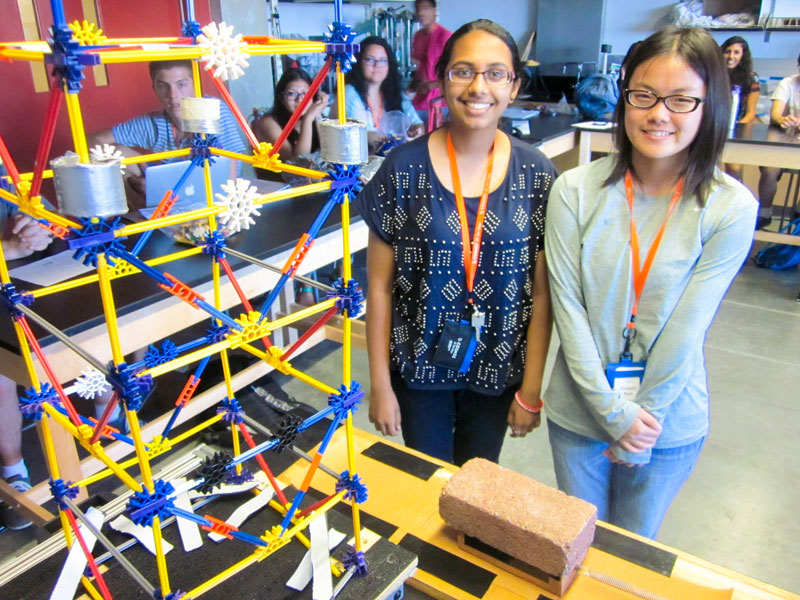
Cluster 4 - Cool Tech: The Science of Heating and Cooling
Instructors:
Renkun Chen, Professor, Mechanical & Aerospace Engineering, UCSD
Zahra Sadeghizadeh, Assistant Teaching Professor, Mechanical & Aerospace Engineering, UCSD
Prerequisite:
Algebra I
1 year of Physics or Physical Science (preferred)
Description:
From smartphones and spacecraft to the servers that power AI and cloud computing, every advanced technology faces the same challenge: managing heat. A single AI data center can draw hundreds of megawatts, and cooling it efficiently is now one of the biggest engineering challenges in the world.
In this cluster, students explore the science and engineering of heat: how it moves, how we control it, and how we can harness it for sustainability. Through lectures, discussions, and hands-on lab experiments, they learn the fundamentals of conduction, convection, and radiation. They then apply them to real problems in electronics cooling and renewable energy.
Students will investigate:
- passive and active CPU cooling
- heat spreading with heat pipes
- infrared thermography
solar heating
- thermoelectric cooling and energy harvesting
Using thermometers, IR cameras, microcontrollers, and 3D-printed fixtures, they will see heat flow directly and test their own designs.
By the end of the cluster, students will understand how thermal science underlies AI data centers, sustainable power systems, and space technology. They will also have hands-on experience that connects physics to engineering practice.
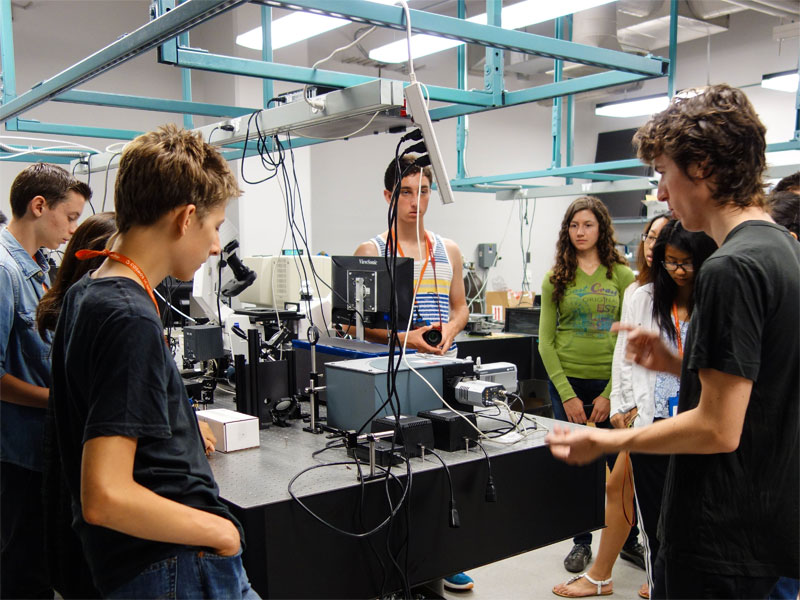
Cluster 5 - PhotonQuest: from Everyday Devices to Quantum Frontiers
Instructors:
Saharnaz Baghdadchi, Associate Teaching Professor, Electrical and Computer Engineering, UCSD
Zhaowei Liu, Professor, Electrical and Computer Engineering, UCSD
Peter Ilinykh, Development Engineer, Electrical and Computer Engineering, UCSD
Prerequisite:
Students who have taken a physics course are especially encouraged to apply.
Curiosity about how light powers our world is more important than prior experience in optics!
Description:
Have you ever wondered how smart glasses project virtual images into your eyes, how the internet carries data through glass fibers, or how solar panels turn sunlight into energy? The answer is photonics, the science and technology of light.
In this cluster, you’ll explore how we generate, control, and use light to make modern life possible, from medical imaging and lasers to next-generation silicon chips and quantum communication.
You’ll start by experimenting with lasers, LEDs, lenses, and prisms to reveal light’s dual nature as both a wave and a particle. Through hands-on, maker-style workshops, you’ll design, build, and program light-powered systems, such as a solar tracker that follows the Sun and an obstacle detection device using time-of-flight sensors. Along the way, you’ll use professional prototyping tools like laser cutting, 3D printing, and CAD modeling to design and fabricate custom parts. You’ll also dive into the future of secure communication in a Quantum Cryptography workshop, where you’ll set up an experiment and create a secret encryption key using the BB84 protocol.
After the workshops, you’ll collaborate on a team project that connects photonics to real-world innovation, then showcase your results at the closing ceremony. By the end, you’ll see how light shapes the technologies of today, and how photonics will power the world of tomorrow.
Cluster 6 - Biodiesel from Renewable Sources
Instructors:
Robert S. Pomeroy, Associate Teaching Professor, Department of Chemistry and Biochemistry, UCSD
Brian Leigh, Assistant Teaching Professor, Department of Chemistry and Biochemistry, UCSD
Prerequisite:
Introductory high school chemistry – Basic knowledge of ionic and covalent bonding, electronegativity and intermolecular forces of attraction.
Students are encouraged to bring a laptop if possible, if not one will be provided.
Description:
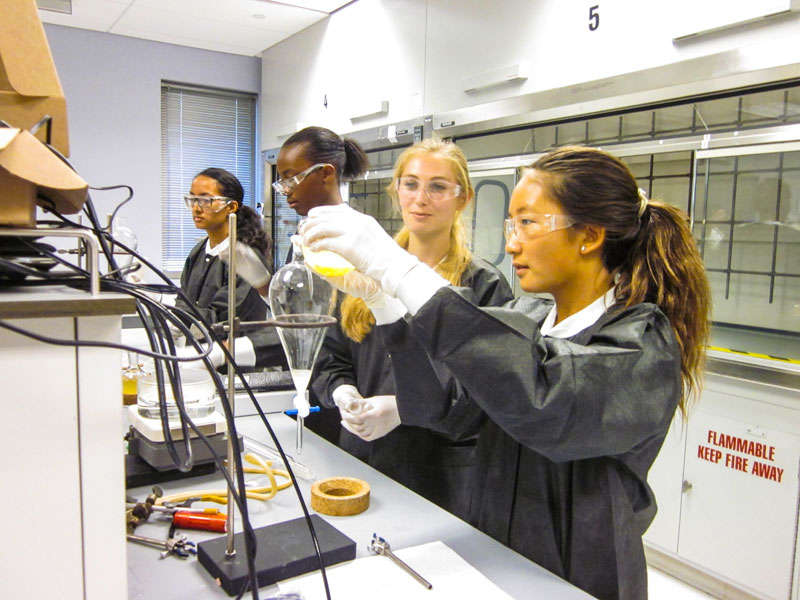
This course will introduce students to renewable biofuels. This is a laboratory intensive experience where the students will extract and purify oil (lipids) from biomass, convert the oil into Fatty Acid Methyl Esters, FAMEs, also known as biodiesel, wash and purify the biodiesel, and then analyze the quality of the finished product. They will use advanced instrumentation such as FTIR, GCMS, Chromatography, and Bomb Calorimetry to determine the quality of their fuel.
Sustainable energy engages scientists, entrepreneurs and consumers searching for a renewable form of energy that will also not place the Earth's ecosystem at greater risk. Biofuels can be generated from biomass. This biomass can range from terrestrial, agricultural, forestry and municipal wastes, energy crops like soybeans, rapeseed, switchgrass and algae. Biodiesel has gained attention in recent years as a renewable fuel source due to its reduced greenhouse gas and particulate emissions, and it can be produced within 10 states in the US. For projects students will create higher value materials from plant lipids to produce renewable and sustainable bioplastics which economically serve as a bridge to large scale biofuels production.
Cluster 7
Machine Learning: Can We Teach a Computer to Think?
Cluster 7 - Machine Learning: Can We Teach a Computer to Think?
Instructors:
Sam Lau, Assistant Teaching Professor, Halıcıoğlu Data Science Institute, UCSD
Prerequisite:
Algebra II or Integrated Math II. This cluster is for students who have taken at least one programming course. The programming course prerequisite can also be fulfilled with 15 weeks of self-studied programming (e.g. through Coursera). If you don't have at least one programming course on your high school transcript, please describe your programming background in your application. Experience with Python programming language is not required.
Description:
Have you ever wondered how ChatGPT learned to converse with us, or how ever-improving autopilot systems in self-driving cars are developed? The answer is “machine learning,” an explosively-growing field. Machine learning is a form of artificial intelligence and it allows us to train computers to make predictions using data. For example if we provide a set of pictures of cats and things that are not cats, a machine learning algorithm can teach the computer to recognize cats. Therefore when the computer sees a new image later, it can tell whether it is a cat or not by itself. Machine learning has permeated our daily lives and is driving innovation in fields like medical diagnosis, face detection, recommendation systems for shopping sites, automatic language translation and climate research.
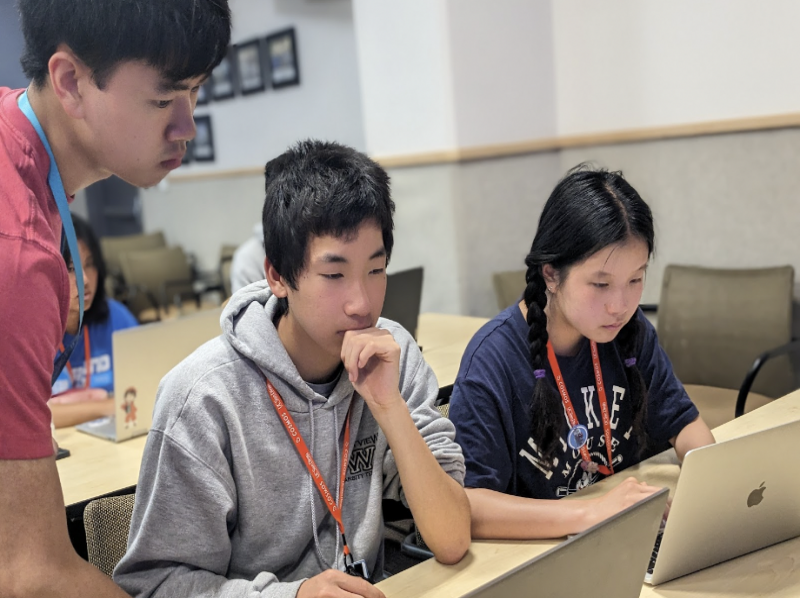
In this cluster, we will introduce you to the basics of machine learning, exploring applications including social science, engineering, and habitat conservation. The cluster will start with a brief Python refresher and then introduce some common machine learning packages. Lectures from the cluster faculty and guest speakers will help you grasp the foundations of machine learning algorithms. Projects throughout the curriculum will offer you more hands-on experience with various machine learning techniques. This cluster is designed for students who already have some exposure to programming but do not already have extensive experience in machine learning. Students are highly encouraged to bring a personal laptop with them for this cluster. If students do not have a personal laptop, we will have some available to borrow.
Cluster 8 - Tissue Engineering and Regenerative Medicine
* This cluster is First Choice only.
Instructors:
Robert Sah, Professor, Shu Chien-Gene Lay Department of Bioengineering & Orthopedic Surgery, UCSD
Roberto Gaetani, Research Scientist, Shu Chien-Gene Lay Department of Bioengineering, UCSD
Prerequisite:
Students must have completed Algebra II or Integrated Math II and one year of high school biology (Honors/AP Bio preferred if available)
Students are encouraged to bring a laptop if possible, if not one will be provided.
Description:
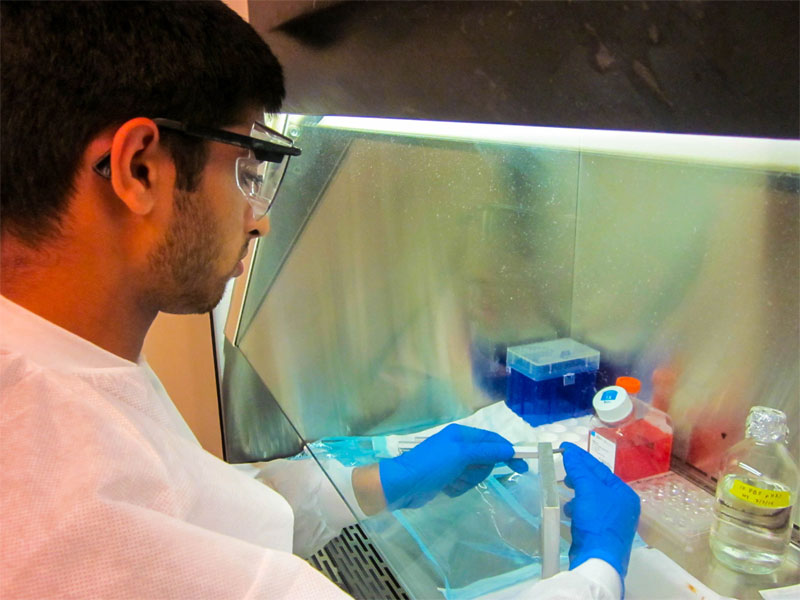
Tissue Engineering (TE) and Regenerative Medicine (RM) both seek to harness the power of biology and chemistry with the precision of engineering to restore, maintain, or improve tissue functions. TE seeks to do so through the application of engineering and life sciences to develop biological substitutes, whereas RM targets therapies to induce regeneration of cells, tissues, and organs. TE-RM are exciting and interdisciplinary fields involving engineers, biologists, chemists, material scientists, and doctors. TE-RM are increasingly providing alternative treatments for medical conditions where traditional treatments such as drugs, medical devices, or transplants have limitations. TE-RM products are rapidly evolving from potent molecules and materials to induce regeneration, to isolated cells to reconstitute damaged tissue, culture-expanded cells to repair damaged knees, modified cells to combat cancer, and formed tissues for drug screening, for engineered skin to treat wounds and burns, and for replacement tissues and organs.
Cluster 9
Music and Technology: Microphones and Microcontrollers
Cluster 9 - Music and Technology: Microphones and Microcontrollers
Instructors:
Joe Cantrell, Co-Instructor, Sound Artist & Musician, Lecturer, UCSD
Prerequisite:
An interest in the science of sound and the creation of sound art and music through both software and hardware tools.
Description:
You do not have to be a musician to have fun and learn how science and engineering can be used to research, develop tools, and create music. In Cluster 9 you will learn about music technology as we explore the many ways in which software and hardware tools are used to create sound-based work. Please keep in mind that you do not need a musical background to enjoy Cluster 9, you only need a creative and curious mind and a fascination for sound and music.
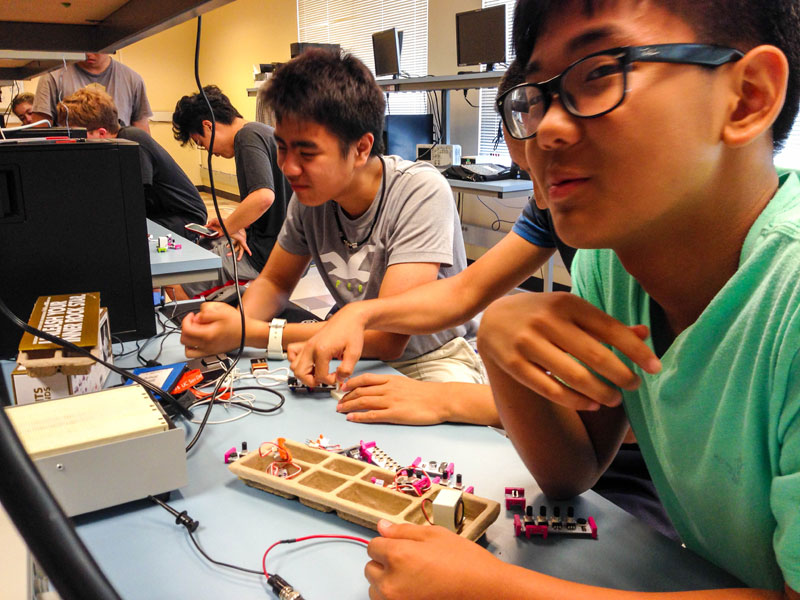
In Cluster 9 you will learn the basic physical principles of how sound works, how we perceive it, and what makes it meaningful. We will look at how different technologies have been utilized by musicians and sound artists. You will learn about the history of electronic music and discover the diverse range of sonic art practices out in the world, some of which we will explore more deeply to understand the science behind them that makes them work. You will have hands-on experience creating your own compositions and sound art through different hardware and software based tools. You will learn to record, edit, and mix your own compositions in an actual recording studio. We will touch on principles of acoustics, sound synthesis, and sound design. You will have a number of technologies on hand to experiment with, including basic electronic components, midi controllers, and microcontrollers. There will be field trips that include visiting art installations, the Museum of Making Music, and visits to the Envision Maker Lab to build microphones and other sound making and research tools for your projects.
During the program students will gain skills to develop and create a group project that will be presented at the end of the program.
Cluster 10 - Robot Inventors
Instructors:
Nick Gravish, Assistant Professor, Department of Mechanical & Aerospace Engineering, UCSD
Curt Schurgers, Teaching Professor, Electrical and Computer Engineering, UCSD
Prerequisite:
Algebra II or Integrated Math II
Programming experience is expected
Students with limited robotics experience or access to such experiences will be prioritized
Description:
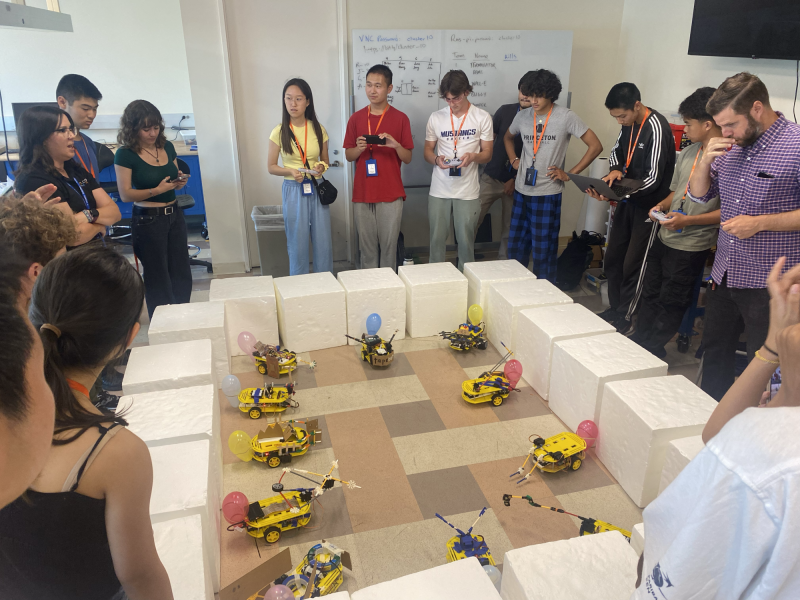
TARS, R2D2, WALL-E, .... these robots have captured all of our imaginations, but reality isn't really that far off. Researchers around the world have made humanoid robots to study how children learn, created robotic animals to carry supplies in war zones, and built highly advanced surgical robots that act like snakes. Robotics is a highly diverse field, bringing together skills of mechanical design, electronics, artificial intelligence, programming, mechatronics, and even social sciences. This cluster will introduce the students to this exciting field and will focus on teaching students how to conceptualize, design, and create a custom robot. They will learn about the mechanical design principles (CAD, basic prototyping), the sensors through which robots interact with the world, and the programming that gives them their autonomy. It is required that students have a basic background in programming (any language, such as Java, C, Python, C++, JavaScript, etc ...). The emphasis for this cluster is towards students with no prior exposure to robotics and no easy access to such opportunities. The cluster consists of lectures from the cluster faculty and guest speakers, a set of hands-on projects, all leading to a final design challenge using hardware and software. Students are highly encouraged to bring a PC laptop with them for this cluster. If students do not have a PC laptop available, one will be available to check out.

Cluster 11 - Design for Launch
Instructors:
Maziar Ghazinejad, Associate Teaching Professor, Department of Mechanical & Aerospace Engineering, UCSD
Prerequisite:
Description:
How do you design a system that must survive rocket launch forces? And how do you test the effects
of microgravity on biological and materials specimens without leaving Earth? These are the central
challenges of this cluster, and the same problems aerospace engineers face every time they prepare a
biological sample or scientific instrument for the International Space Station. Design for Launch
introduces students to these problems through a four-week engineering design experience grounded in
real constraints, tools, and testing conditions.
The cluster design challenge is concrete: package a fragile biological specimen to survive a simulated
ISS launch. Students work through the full engineering cycle, from initial sketching and physical
reasoning, through computer-aided design (CAD) and 3D-printed prototyping, to iterative testing under
static and dynamic loads. The process mirrors professional engineering practice, where designs are
evaluated, revised, and evaluated again based on test data rather than intuition alone.
The cluster includes testing final designs on the Gravity Lab’s custom ground analog platforms, a
Random Positioning Machine that simulates microgravity, and a 14-foot centrifuge capable of
reproducing launch acceleration profiles up to 8g. These instruments were designed and built at UC
San Diego and give students direct exposure to how altered gravity is studied and simulated on the
ground. Along the way, students see why gravity matters for both materials and biological systems.
Students practice the iterative engineering design process through CAD, train in additive manufacturing
through hands-on prototyping, and learn the physics of LEO launches and the engineering
requirements of space research platforms. They finish by testing their own designs under simulated
spaceflight conditions using research-grade ground analog instruments. This experience strengthens
students’ pathways into STEM by exposing them to emerging technologies and space-based research
well beyond the standard high school curriculum.
Cluster 11 - Lithium-Ion Batteries: Chemistry, Materials and Devices
Instructors:
Zheng Chen, Professor, Chemical and Nano Engineering, UCSD
Kent Griffith, Assistant Professor, Department of Chemistry, UCSD
Prerequisite:
1 year of high school Chemistry and Physics (AP Chem, AP Physics)
No prior battery or laboratory research experience is required.
Description:
Lithium-ion batteries power our phones, laptops, and electric vehicles, and they are essential for storing solar and wind energy. Yet researchers are still racing to make them safer, longer-lasting, faster-charging, and less dependent on scarce materials. This cluster introduces the science and engineering behind these devices, from the atoms in an electrode to the battery pack in a car.
Students will learn how batteries store and release energy, and how cathode, anode, and electrolyte choices (such as LFP, NMC, Graphite and silicon) affect energy, cost, safety, and lifetime. In hands-on labs, students will assemble and test battery cells and use tools such as impedance analyzer, potentiosat and galvanostaic cycler to evaluate electrode and cell performance. We will also explore sustainability topics, including recycling and next-generation solid-state and sodium-ion batteries. Guest speakers from research and industry will share how batteries are developed. The cluster concludes with a team project that students design, test, and present.
* These clusters are First Choice only.